The adoption of electronic health record (EHR) systems has become essential for improving care delivery, enhancing communication, and streamlining administrative processes. However, implementing an EHR is often more complicated than anticipated. From cost overruns to workflow disruptions, providers frequently encounter roadblocks that can derail progress.
In 2025, healthcare organizations must address these obstacles head-on, as demands for efficiency, compliance, and patient-centered care continue to rise. Here, we will take a closer look at the most pressing challenges in Electronic Health Record Management and offer proven strategies to overcome them.
The Growing Importance of Electronic Health Record Management
Effective Electronic Health Record Management ensures that patient data is secure, accessible, and actionable. With more advanced electronic medical record systems integrating artificial intelligence, telehealth, and predictive analytics, the stakes are higher than ever. Organizations that fail to implement and manage their EHRs effectively risk losing both financial stability and patient trust.
Major Challenges in Implementing Electronic Medical Record Systems
Implementing an Electronic Medical Record (EMR) system is rarely a straightforward process. The path to adoption is often marked by financial, technical, and cultural obstacles. Understanding these challenges is essential before exploring potential solutions, so let’s have a look.
- High Upfront and Ongoing Costs
One of the biggest hurdles is financial. Licensing, software customization, staff training, and hardware upgrades can easily push costs into the millions for larger systems. Beyond the initial investment, ongoing maintenance fees and update costs often exceed expectations. For smaller clinics, this financial strain can delay adoption altogether.
- Staff Resistance and Change Fatigue
Healthcare professionals often face packed schedules and high-stress environments. Introducing a new electronic health record system disrupts workflows, leading to frustration and decreased morale. Many providers resist adopting new systems, either due to fear of inefficiency or previous negative experiences with poorly designed technology.
- Workflow Disruptions
Transitioning from paper or legacy systems often creates significant slowdowns. Providers may spend more time navigating screens than interacting with patients. Poorly mapped workflows can also result in duplicated tasks, coding errors, and bottlenecks in patient care.
- Interoperability Issues
One of the most persistent barriers is the inability of systems to “talk” to each other. Many electronic medical record systems are not designed to share data seamlessly across providers, labs, pharmacies, and insurers. This creates data silos, prevents effective care coordination, and frustrates both staff and patients.
- Data Migration and Accuracy Concerns
Migrating years of paper records or older digital files into a new EHR can be error-prone. Missing, duplicated, or incorrect data during migration can compromise patient safety, billing accuracy, and compliance.
- Security and Compliance Risks
Cybersecurity is a top concern in 2025. Hackers increasingly target healthcare systems for sensitive patient data. Without robust Electronic Health Record Management, organizations risk HIPAA violations, data breaches, and reputational damage.
- Limited Customization and Scalability
Not every EHR fits every practice. Many systems come with rigid workflows that don’t match specialty needs. Additionally, a system that works for a small clinic may not scale effectively as the practice grows. This mismatch can result in wasted investments.
Strategies to Overcome EHR Implementation Challenges
For every challenge, there is a solution, but it requires foresight, planning, and a willingness to adapt.
Below are strategies healthcare organizations can use to overcome the most pressing EHR challenges in 2025.
- Budget Planning and ROI Analysis
Instead of focusing solely on upfront costs, organizations should evaluate the long-term return on investment. Proper planning includes not only software and hardware expenses but also training, support, and maintenance. Many providers also take advantage of government incentives for adopting certified electronic health record systems.
- Building a Culture of Change Management
Resistance to new electronic medical record systems can be minimized through strong leadership. Involving clinicians in the decision-making process, offering clear communication about benefits, and highlighting success stories can build trust. Incentives for early adopters and peer-to-peer support also help staff embrace change.
- Redesigning Workflows Before Go-Live
Rather than forcing old workflows into new systems, providers should map out streamlined processes in advance. Shadowing staff and gathering input from multiple departments ensures the new EHR enhances productivity rather than creating new burdens. Pilot programs allow organizations to identify issues before full rollout.
- Prioritizing Interoperability from the Start
When selecting an EHR vendor, interoperability must be a non-negotiable requirement. Look for systems that support standardized data exchange protocols, integrate with labs and pharmacies, and allow patients to access their records through portals. Improved interoperability leads to stronger care coordination and patient satisfaction.
- Data Migration Strategies
A detailed data migration plan is essential. This includes data cleansing, test migrations, and validation checks to ensure accuracy. Engaging IT specialists and vendors early reduces the risk of errors that could jeopardize patient care or billing.
- Strengthening Cybersecurity Protocols
Protecting patient data is at the core of Electronic Health Record Management. Organizations should adopt advanced security measures such as multi-factor authentication, encryption, regular audits, and intrusion detection systems. Training staff on data security best practices further reduces risks.
- Choosing Flexible, Scalable Solutions
Healthcare providers should invest in electronic medical record systems that can adapt to their needs. Customizable features ensure the system aligns with specialty workflows, while scalability allows for expansion without requiring a complete system overhaul.
The Role of Emerging Technologies in 2025
New technologies are reshaping how EHRs support patient care. Artificial intelligence helps identify risks earlier, predictive analytics support preventive care, and telehealth integration allows providers to reach patients anywhere. These innovations, when combined with strong Electronic Health Record Management, will define the next era of healthcare delivery.
Conclusion
Implementing an electronic health record system is one of the most significant challenges a healthcare organization will face, but it’s also one of the most rewarding. By addressing cost concerns, managing change effectively, improving interoperability, and prioritizing cybersecurity, providers can ensure their investment drives long-term success.
In 2025, overcoming EHR challenges isn’t just about technology; it’s about strategy, culture, and commitment to patient-centered care. Organizations that master these elements will not only thrive but also set the standard for modern healthcare.
FAQs
- What is the biggest challenge in EHR implementation today?
The most common challenge is staff resistance and workflow disruption. Without strong training and leadership, adoption rates remain low.
- How does Electronic Health Record Management improve care?
It ensures accurate, real-time access to data, reduces medical errors, and improves collaboration between providers.
- Why is interoperability such a problem for electronic medical record systems?
Many EHRs use different standards and formats, making it difficult to exchange information seamlessly across platforms.
- What steps can improve data security in EHRs?
Implementing encryption, multi-factor authentication, regular security audits, and ongoing staff training are critical.
- How can smaller practices manage the high cost of EHR adoption?
Careful budgeting, phased rollouts, cloud-based EHR options, and exploring government incentive programs can reduce the financial burden.
Choosing an electronic health record system for your practice is more than just a technical decision. It can directly affect your workflow, patient care, compliance, and overall efficiency. With so many options available, from cloud-based systems to specialty-specific platforms, the selection process can feel overwhelming. The key is to take a structured approach that considers your practice needs, budget, staff, and long-term growth.
Why Choosing the Right EHR Matters
An electronic health record system is more than a digital filing cabinet for patient charts. It is the central hub for patient information, scheduling, billing, and reporting. Selecting an inefficient system can result in workflow disruptions, frustrated staff, lost data and even compliance issues. On the other hand, selecting the right system improves efficiency, enhances patient experience, and simplifies Electronic Health Record Management.
The goal is to find a system that aligns with your practice’s unique needs while supporting your growth and providing a seamless experience for both staff and patients.
Evaluate Your Practice Requirements
- Assess Your Practice Size and Specialties
Before exploring vendors, evaluate your practice size, specialty, and patient volume. Different practices have different requirements. A small family clinic may need simple charting and scheduling, whereas a multispecialty clinic may require more advanced features such as integrated lab results, telehealth support, and billing automation.
- Identify Key Workflows
Next, consider the workflows that drive your practice. These include scheduling appointments, documenting visits, processing claims, and generating reports. Understanding your workflow ensures your electronic medical record systems can adapt to your daily operations instead of forcing you to change the way you work.
- Determine Essential Features
Make a list of must-have features. Some examples include e-prescribing, lab integration, patient portal, telehealth capabilities, and reporting tools. Involving your team in this step helps identify the features that will truly improve efficiency and patient care.
Types of EHR Systems
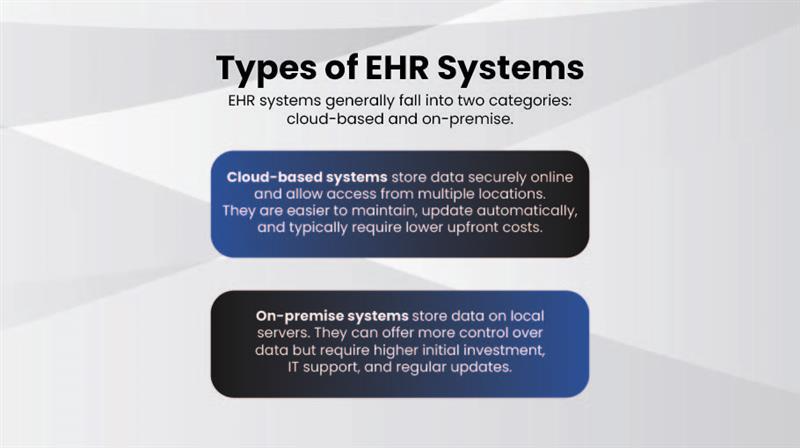
EHR systems generally fall into two categories: cloud-based and on-premise.
- Cloud-based systems store data securely online and allow access from multiple locations. They are easier to maintain, update automatically, and typically require lower upfront costs.
- On-premise systems store data on local servers. They can offer more control over data but require higher initial investment, IT support, and regular updates.
Some vendors offer specialty-specific solutions that cater to mental health, pediatrics, or cardiology. Selecting a system tailored to your specialty can save time and improve your staff’s productivity.
Ensuring Compliance and Data Security
Safety and compliance are critical in healthcare. Make sure your system is fully HIPAA compliant and follows data protection regulations. Look for features like encryption, access controls, secure storage, and audit trails.
Regular backups and disaster recovery plans prove your practice is protected from data loss. A secure electronic health record system not only secures your patients but also safeguards your practice from legal and financial risks.
Evaluating Usability and Workflow Integration
An intuitive interface is essential for all users, including doctors, nurses, and administrative staff. The system should allow easy customization to match your workflow and integrate easily with other tools such as billing software, lab systems, and practice management platforms.
Ease of use impacts adoption rates and reduces errors. Engaging your team in the evaluation process ensures the selected electronic medical record system fits everyone’s needs.
Budgeting and Assessing Return on Investment (ROI)
Money is always a significant factor. Examine up-front costs, subscription fees, and any further expenses for upgrades or training. The long-term return on investment should be considered. In the end, an efficient EHR saves time and money by lowering errors, improving billing, and increasing efficiency.
Although buying an efficient system may seem costly at first, the advantages in terms of patient satisfaction and workflow efficiency sometimes exceed the expenses. The goal of electronic health record management is to gradually add value to your clinic, not just store data.
Vendor Reputation and Support
A reliable vendor makes a huge difference. Evaluate customer service, technical support availability, and the vendor’s experience in your specialty. Reading reviews, case studies, and testimonials helps you understand how the system performs in real-world scenarios.
Prompt support is critical during implementation and beyond. Good vendors also provide ongoing updates and training resources to ensure your system stays current and effective.
Testing Through Demos and Trials
Never commit without testing the system (request a demo or trial period and involve your staff in the evaluation). Pay attention to usability, reporting features, workflow compatibility, and integration with your existing tools.
A hands-on trial allows you to identify potential challenges before investing. This step ensures that the electronic medical record systems you select meet all essential requirements and provide a smooth experience for both staff and patients.
Planning Implementation and Training
Implementing a new EHR system requires careful planning. Prepare a timeline for data migration and staff training. Provide resources and support to minimize disruption to patient care. Proper training ensures everyone is comfortable using the system and maximizes its potential benefits.
Future-Proofing Your EHR
Choose a system that can grow with your practice. Scalability, frequent updates, and compatibility with emerging technologies like telehealth and AI tools are important factors. The right EHR supports long-term growth, adapts to evolving regulations, and continues to enhance Electronic Health Record Management over time.
FAQs
- What is the difference between an electronic health record and an electronic medical record system?
An electronic health record is a comprehensive system that tracks patient care across multiple providers, while electronic medical record systems usually store patient information within a single practice.
- Why is Electronic Health Record Management important?
Proper Electronic Health Record Management ensures accurate, secure, and accessible patient information, improving workflow, compliance, and patient care.
- Should I choose a cloud-based or on-premise EHR system?
It depends on your practice needs. Cloud-based systems offer easier updates and remote access, while on-premise systems provide more control but require higher maintenance.
- How can I evaluate if an EHR system fits my practice?
Request demos and trials, involve your staff, and check for usability, workflow integration, and feature alignment with your practice requirements.
- How do I ensure my EHR system is secure and compliant?
Look for HIPAA compliance, encryption, secure storage, audit trails, and regular backups to protect patient data and your practice.
Making an Informed Choice
Selecting the right electronic health record system is one of the most important decisions your practice will make. You can make an informed choice by evaluating your needs, understanding system types, ensuring compliance, evaluating usability, budgeting wisely, and testing vendors.
Remember, an EHR is not just a digital filing system. It is a tool for smarter practice management, better Electronic Health Record Management, and long-term success. Choosing wisely ensures your practice remains efficient, compliant, and patient-focused for years to come.
Running a mental health private practice isn’t easy. You’re balancing the needs of your clients with the mountain of paperwork, billing, compliance, and scheduling. If you’ve ever wished you had more hours in your day, chances are you need a smarter system to manage your workflow.
That’s where a strong electronic health record (EHR) system comes in. The problem is that the majority of generic EHRs don’t adequately address the requirements of mental health professionals. You require something that is specific to your work style, clientele, and practice. What to look for, which platforms are worthwhile, and how to get started stress-free are all covered in this book.
Why Mental Health Practices Deserve Specialized EHRs
- The Notes You Write Are Different
You’re not jotting down blood pressure readings or lab results. Your notes are progress-based, client-centered, and tied to therapeutic goals. A specialized EHR understands that.
- Privacy Isn’t Optional
Mental health records are some of the most sensitive pieces of information a person can share. Your system must be built with HIPAA compliance, role-based access, and encrypted storage.
- Sessions Aren’t Always One-on-One
Whether it’s group therapy, couples counseling, or virtual check-ins, your schedule is complex. A good EHR should keep up without making things harder.
What Makes an EHR “The Right One”?
Custom Notes and Templates
Look for flexibility. You should be able to create templates for SOAP notes, biopsychosocial assessments, and treatment plans without being boxed into someone else’s workflow.
Seamless Telehealth
Clients expect virtual care options. You shouldn’t have to jump between apps. The best EHRs have video built in, with automatic scheduling and secure session links.
Hassle-Free Billing
If you’ve ever struggled with insurance rejections or forgotten superbills, you’re not alone. Choose a system that supports CPT codes, real-time eligibility checks, and claims submission.
A Solid Patient Portal
Let clients handle appointment requests, payment, and paperwork online. It saves your team hours and keeps things organized.
Top Picks: Best EHRs for Mental Health Providers
1. SimplePractice
This one’s popular for a reason. It’s clean, easy to navigate, and packed with features like custom intake forms, paperless billing, and a telehealth module.
Best for: Solo practitioners or small teams.
2. TherapyNotes
If documentation and insurance billing are top priorities, this system delivers. It even prompts you to complete notes after each session.
Best for: Practices that rely heavily on insurance reimbursement.
3. TheraNest
A solid choice if you’re growing. It handles group therapy, has great reporting features, and the customer service is consistently rated high.
Best for: Expanding practices or clinics with multiple providers.
4. Valant
Built with psychiatrists in mind, it combines behavioral and medical records in one system. You get robust scheduling, e-prescribing, and progress tracking.
Best for: Larger mental health organizations and psychiatric care.
5. Kareo for Behavioral Health
Straightforward and efficient, Kareo focuses on helping small practices handle electronic claims, charting, and scheduling all from one dashboard.
Best for: Insurance-heavy practices that need quick billing tools.
Where Techmatter Global Fits In
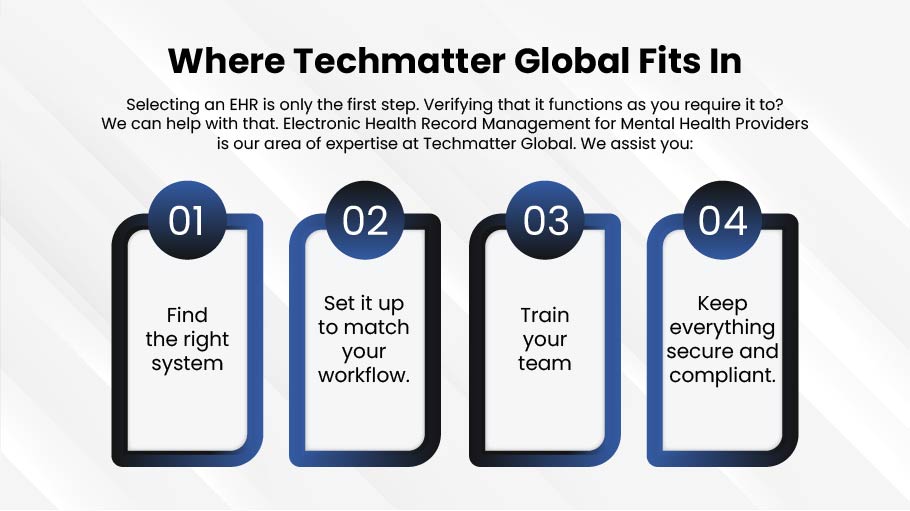
Selecting an EHR is only the first step. Verifying that it functions as you require it to? We can help with that. Electronic Health Record Management for Mental Health Providers is our area of expertise at Techmatter Global. We assist you:
- Find the right system
- Set it up to match your workflow.
- Train your team
- Keep everything secure and compliant.
You don’t have to figure it out alone.
Questions Worth Asking Before You Commit
- Does this EHR support the way you write notes?
- Can it grow with your practice?
- Is the pricing transparent?
- What support is available after onboarding?
- Will it make your life easier or add more work?
If you’re unsure, we can help you evaluate all of that before you sign anything.
Avoid These Common Mistakes
- Going with the Cheapest Option
Cheap isn’t always better. If it lacks features you need, you’ll waste time and money fixing it later.
- Not Involving Your Team
You won’t be the only one using the system. Include your staff in demos and feedback sessions before choosing.
- Ignoring Compliance
Compliance is non-negotiable in mental health. A breach can cost you clients and your license.
How the Right EHR Can Transform Your Practice
Imagine having:
- All your notes in one place
- Fewer billing headaches
- Better communication with clients
- More time to focus on care instead of admin
That’s what a well-chosen electronic health record system delivers. And when it’s properly managed and customized, the benefits go even further.
Don’t Just Get an EHR — Get the Right Partner
You don’t need to be a tech expert to run a modern practice. You just need the right support. Techmatter Global makes the process smooth from start to finish. From setup to ongoing Electronic Health Record Management, we help you save time, reduce errors, and grow confidently. Let’s talk about where you are today and where you want to be.
FAQs
1. Can I switch from paper records to digital without losing data?
Yes. With the right support, you can migrate everything safely and securely.
2. How long does it take to set up an EHR system?
Most systems can be up and running in 2 to 6 weeks depending on your needs.
3. Is a mental health-specific EHR really necessary?
Absolutely. It makes documentation, billing, and compliance much easier and tailored to your field.
4. Do I need to hire someone just to manage the EHR?
Not always. But having a partner like Techmatter Global means your team can focus on clients, not tech issues.
5. Can I use the same EHR if I add more therapists to my practice?
Yes. Many systems scale easily. Just make sure your original setup allows for that kind of growth.
Conclusion
Choosing the best EHR isn’t about finding the flashiest software. It’s about choosing a tool that fits your day-to-day needs and helps you deliver better care without burning out. If you want something built for mental health providers, not just general clinics, you have great options out there.
And with Techmatter Global as your guide, you’re not just buying software. You’re building a smarter practice, one system at a time.
Digital health systems are reshaping how care is delivered, managed, and scaled across medical environments. For healthcare leaders, clinic owners, and IT professionals, understanding the difference between an Electronic Health Record (EHR) and an Electronic Medical Record (EMR) is more than a technicality; it’s a strategic decision with long-term impact.
The systems you choose today will determine how well your organization performs tomorrow. At Techmatter Global, we work with medical practices, hospitals, and healthcare startups to help them make smarter choices when it comes to electronic medical record systems and scalable EHR infrastructures.
Regardless of your plans to enhance your current EMR or switch to an enterprise-grade EHR, this article explains the differences, applications, and how to pick the best option for your business.
Understanding the Basics: EMR vs. EHR
While the terms EHR and EMR are often used interchangeably, they serve different purposes and audiences.
- An Electronic Medical Record (EMR) is essentially a digital version of the paper charts found in a clinician’s office.
- An Electronic Health Record (EHR), on the other hand, is a more comprehensive system that goes beyond the clinic, facilitating data sharing across multiple providers, specialists, and even across states or countries.
At first glance, the difference seems subtle. But for decision-makers in clinics and hospitals, understanding this nuance is crucial. Choosing the right system can lead to improved patient outcomes, higher efficiency, and long-term cost savings.
What is an Electronic Medical Record (EMR)?
An electronic medical record is a software tool used within a single healthcare organization to store and manage patient data. It includes medical history, diagnoses, medications, allergies, lab results, and treatment plans.
Ideal For:
- Solo practitioners
- Small clinics
- Specialized medical practices with in-house teams
Key Benefits:
- Digitized patient charting.
- Quicker access to patient histories.
- Automated appointment scheduling.
- Simplified billing and coding.
Yet, the primary limitation of EMRs lies in data sharing. They are typically confined to one provider’s system, meaning that when a patient moves to another clinic, their data doesn’t move with them unless manually transferred. That’s where EHRs take the lead.
What is an Electronic Health Record (EHR)?
Electronic Health Records represent the next level of digital healthcare. While an EHR contains all the information found in an EMR, it is designed for data interoperability. This means it supports seamless information exchange between various healthcare providers, labs, pharmacies, and even insurance platforms.
Ideal For:
- Multi-site healthcare networks
- Hospitals and large clinics
- Organizations seeking telehealth integration
Key Features:
- Secure access to real time patient data across systems.
- Integration with pharmacy and lab networks.
- Patient portals for engagement and education.
- Compliance with national and international data standards.
The Strategic Edge: Why the Difference Matters
For healthcare executives, IT administrators, and clinic owners, understanding the difference isn’t just academic; it’s a business decision. Here’s why:
1. Better Clinical Outcomes
Because EHRs provide doctors access to a patient’s whole medical history, regardless of where they have previously received treatment they can make better judgments.
2. Scalability and Growth
If your organization is expanding or plans to offer multi-specialty services, EHRs offer the flexibility to scale. EMRs, while efficient, can become bottlenecks during growth.
3. Regulatory Compliance
Practices that implement EHRs might get incentives from government programs like Meaningful Use and MIPS. Financial fines may be imposed for failure to adopt compliance systems.
4. Enhanced Patient Experience
Modern patients demand transparency and access. EHRs offer tools like patient portals, online appointment booking, and test result notifications, all key to retention and satisfaction.
Why This Matters for You—A Lead-Generating Perspective
If you’re a clinic, hospital, or healthcare startup aiming to digitize your practice, your choice of system will define your efficiency, data security, and patient trust for years to come.
Our specialty at Techmatter Global is helping you navigate the difficult process of deciding between full-featured EHR platforms and electronic medical record solutions. In addition to making suggestions, we also integrate, optimize, and deploy your systems for sustained performance. Our team makes sure your solution, whether you’re implementing a new EHR or updating an old one, is:
- Cost-effective
- Secure
- Compliant
- Scalable
Real-World Example: Small Clinic vs. Hospital Network
Dr. Lena’s Family Practice uses an electronic medical record system to manage appointments, prescriptions, and lab requests all within a single clinic. It’s efficient, low-cost, and meets her clinic’s needs.
However, Dr. Lena’s EMR is inadequate when she collaborates with a hospital group to increase services. The hospital has a full-featured EHR system that facilitates real-time departmental updates, lab connections, and specialist referrals. To align Dr. Lena upgrades to the EHR, enabling better interoperability and patient interaction options.
Making the Right Choice: EMR or EHR?
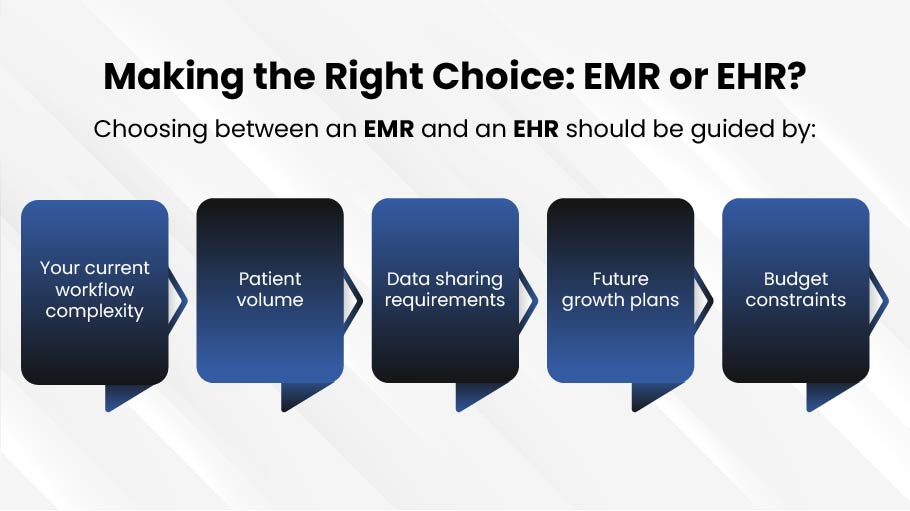
Choosing between an EMR and an EHR should be guided by:
- Your current workflow complexity
- Patient volume
- Data sharing requirements
- Future growth plans
- Budget constraints
If you’re unsure which route to take, Techmatter Global is here to simplify your decision-making with a free needs assessment.
Top Signs It’s Time to Switch to EHR
- You frequently refer patients to external specialists.
- Your patients are asking for online access to their records.
- You’re managing multiple locations or telehealth services.
- Your EMR system feels outdated or rigid.
Final Thoughts: Drive Better Care with the Right Digital System
There is more to the distinction between EMR and EHR than just functionality; it’s a question of perspective. EMRs help you stay in business. You become competitive with EHRs. Investing in a strong, scalable EHR system is the obvious way to go if you want to be at the forefront of patient happiness, operational effectiveness, and regulatory compliance.
And you don’t have to navigate it alone. At Techmatter Global, we’re more than IT consultants; we’re your digital transformation partners.
Implementing an Electronic Health Record (EHR) system is one of the most critical decisions a healthcare provider can make, not just to digitize records but to improve overall patient care, streamline operations, and boost revenue. However, without a solid EHR implementation plan, the entire process can become overwhelming, costly, and ineffective. Whether you’re a small clinic or a multi-location hospital, this guide will walk you through the most essential steps to ensure your implementation is successful and more importantly, profitable.
Why EHR Implementation Is More Than a Software Upgrade
Consider establishing an EHR to be similar to building a new clinic branch, except this time online. It’s more than just installing software. It affects all aspects of your organization, including clinical operations, billing systems, personnel responsibilities, and even patient experience. The success of this shift is dependent on careful preparation and alignment with clinical and budgetary objectives.
And if you’re aiming to improve Revenue Cycle Management Solutions and ensure clean data flows from the first patient visit to the final billing, your EHR must be tailored and deployed with precision.
Step 1: Set Clear Goals and Outcomes
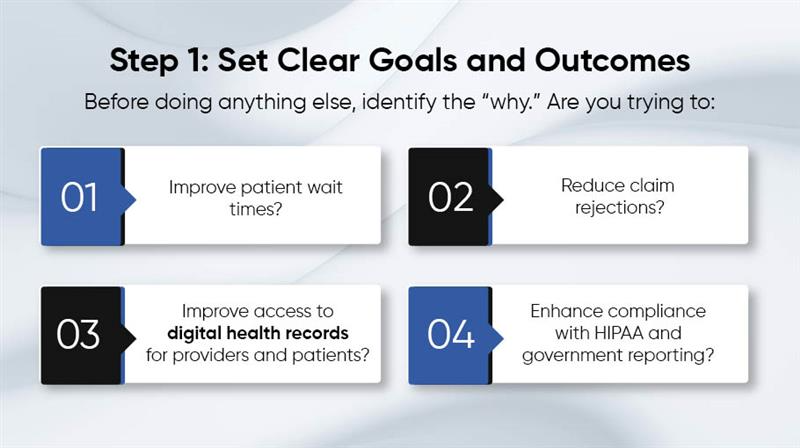
Before doing anything else, identify the “why.” Are you trying to:
- Improve patient wait times?
- Reduce claim rejections?
- Improve access to digital health records for providers and patients?
- Enhance compliance with HIPAA and government reporting?
The clearer your goals, the easier it is to align the system and the people who will use it. These goals should also tie directly to business growth and revenue improvement. Don’t just think operationally, think strategically.
Step 2: Build a Cross-Functional Implementation Team
EHR is not just a project to complete. It’s a transformation that helps healthcare practices shape their infrastructure. For which your team should have the following:
- Clinical champions (doctors and nurses)
- Administrative leads
- Billing and RCM experts
- IT specialists
- Compliance managers
Make sure each department has a voice. Why? Because the front desk’s needs are just as important as the billing department’s when configuring workflows that affect cash flow and patient satisfaction.
Step 3: Conduct a Workflow Analysis
Before introducing new technology, understand how your team currently works. What steps are they taking for:
- Patient check-in
- Insurance verification
- Clinical documentation
- Coding and billing
Once you have a clear picture, you can map these into your EHR setup and remove inefficiencies. This is where many providers overlook a major opportunity. Optimized workflows within your EHR can directly support Revenue Cycle Management Solutions by reducing claim denials and speeding up collections.
Step 4: Choose the Right Vendor (Not Just the Popular One)
EHR is not for the purpose of flexing and entertainment. It is basically developed for the purpose of providing all the necessary requirements for healthcare practices. So find the one that suits your practice best rather than one that has the flashiest features.
The best EHR for your organization is the one that fits your needs, not the one with the flashiest features.
Here’s what to look for:
- Customizable templates for your specialty
- Built-in RCM tools or easy integration with billing systems
- Seamless access to digital health records via desktop and mobile
- Strong customer support and training options
- Compliance with all relevant standards like HL7, FHIR, and HIPAA
Take the time to request demos, ask tough questions, and involve real end-users in the decision-making process.
Step 5: Set a Realistic Budget and Timeline
EHR implementation isn’t just a capital investment. It includes:
- Software and licensing fees
- Hardware upgrades
- Staff training
- Data migration costs
- Lost productivity during the transition period
Be realistic and build in a buffer. It’s better to over-prepare than to be caught off-guard halfway through.
Step 6: Data Migration Strategy
Moving all the data from the old system to the new EHR system is one of the critical components of implementation. Because this is not just about dumping data, but it also includes:
- Clean the data before migration
- Validate all entries after the move
- Map custom fields accurately
- Ensure full access to previous digital health records
Keep one thing in mind that even a single mistake in data migration can lead you to clinical risks, claim rejections, and lost revenue.
Step 7: Staff Training and Change Management
This step can make or break your implementation.
- Create role-based training programs
- Offer hands-on learning sessions
- Use super-users to support their teams
- Be open to feedback and make real-time adjustments
Your staff doesn’t need to become tech experts, but they must become confident users of the system. This directly impacts productivity and ensures the EHR becomes a tool, not a burden.
Step 8: Go-Live with a Contingency Plan
Set a go-live date when the clinic is less busy, if possible. Prepare for:
- Technical support on-site
- Extended hours for training and support
- Backup systems for patient care
- Communication to patients about new processes
Expect hiccups. That’s normal. The key is having a rapid response plan to handle them.
Step 9: Post-Go-Live Optimization
Many providers stop at go-live. That’s a mistake. The first 90 days post-implementation are crucial for optimizing performance.
- Monitor system usage
- Track error rates
- Identify slowdowns in the billing cycle
- Continuously improve workflows based on data
If your EHR isn’t improving your Revenue Cycle Management Solutions within a few months, something needs to be adjusted.
Step 10: Align EHR with Revenue Cycle Management Goals
This is where you get the return on investment. The basic purpose of EHR is not just to stand in a digital world. But to become the backbone of a more stable, digitally efficient and profit-generating practice.
- Use integrated coding tools to reduce billing errors
- Automate claims submission and follow-ups
- Improve patient collections through portals and reminders
- Track KPIs like A/R days, denial rates, and patient collections
Tie every EHR feature back to your bottom line. When used right, it becomes your silent business partner.
Step 11: Embrace Patient Engagement Tools
Today’s patients expect convenience. Make sure your EHR supports:
- Patient portals
- Secure messaging
- Online payments
- Access to digital health records
This doesn’t just improve satisfaction. It also reduces admin workload and accelerates payments.
Step 12: Stay Compliant and Secure
Your EHR must comply with:
- HIPAA privacy rules
- CMS quality reporting
- FDA standards for clinical data use
Additionally, ensure the system offers:
- User authentication and access logs
- Regular data backups
- Secure encryption for records
A single breach or non-compliant process can lead to hefty fines and patient mistrust.
Final Thoughts: Your EHR Is a Business Strategy
The world of healthcare is just going beyond paperless. The implementation of EHR is a bold move that helps practices in improving their efficiency, financial excellence, and patient care.
You may avoid typical problems and fully leverage technology by following a disciplined checklist, aligning with your revenue goals, and remaining laser-focused on processes and adoption.
Whether you want to enhance billing performance, engage patients digitally, or acquire greater operational insights, this method can help you get started on the path to smarter care delivery and long-term success.
In today’s fast-paced healthcare environment, information is everything. From improving diagnoses to enhancing patient outcomes, the flow of accurate and timely data can make or break a healthcare system. At the core of this digital transformation lies a powerful tool: electronic health records (EHRs). But how did we get here? What began as paper notes scribbled on charts has now become a critical component of modern medicine.
Whether you’re a hospital executive, private clinic manager, or health IT decision-maker, understanding the history of EMR systems and the potential of digital health record solutions is key to staying competitive, efficient, and compliant in the healthcare industry.
Let’s explore how EHRs evolved, where they stand today, and—most importantly—how your organization can leverage them to not only improve patient care but also gain a competitive business advantage.
From Paper Charts to Digital Powerhouses: A Historical Look
Before computers were commonplace in healthcare, patient records were stored in bulky folders, piled high in filing cabinets. These paper-based records were not only inefficient but also prone to loss, damage, and misinterpretation.
The shift began in the 1960s when large institutions like the Mayo Clinic and Lockheed Corporation started experimenting with storing patient data electronically. These early efforts were clunky and limited, but they planted the seed for what would eventually become full-scale electronic health records.
In the 1970s and 1980s, as computer technology advanced, hospitals began investing in digital health record systems to streamline administrative tasks like billing and scheduling. It wasn’t until the 1990s, however, that clinical data began to be integrated. This was the turning point when EHRs began to show true clinical value.
The Impact of the HITECH Act: Mass Adoption
A real game-changer arrived in 2009 with the introduction of the Health Information Technology for Economic and Clinical Health (HITECH) Act in the U.S. This legislation provided financial incentives to hospitals and healthcare providers to adopt certified EHR technology. Adoption skyrocketed. What was once a niche investment became a healthcare industry standard.
But this wasn’t just about going paperless—it was about redefining how healthcare data was stored, accessed, and used. Interoperability, data sharing, real-time updates, and patient engagement all became central goals of these systems.
Modern-Day EHRs: More Than Just Digital Filing Cabinets
Today’s electronic health records are sophisticated platforms designed to support the entire continuum of care. They go far beyond digitizing paper charts. With features like clinical decision support, predictive analytics, and patient portals, EHRs empower providers to deliver faster, safer, and more personalized care.
Here’s what a modern digital health record system typically includes:
- Real-time charting: Instant access to patient history, labs, imaging, and medications.
- Clinical alerts and reminders: Helping physicians avoid errors and follow best practices.
- Integration with labs and pharmacies: Seamless order and result tracking.
- Patient engagement portals: Allowing patients to view test results, request refills, or message providers.
Not only does this integration add value for clinicians it changes the game for patients. Just picture it: emergency room doctors can immediately access your medical history, allergies and prior treatments. This is more than convenience it’s potentially life saving.
Why EHRs Matter for Healthcare Organizations Today
If you’re running a healthcare business, you already know that efficiency, compliance, and patient satisfaction are your top priorities. Here’s how implementing or optimizing electronic health records can help you lead in those areas:
- Improved Workflow Efficiency: Automating routine tasks frees up staff to focus on patient care.
- Data-Driven Decisions: With structured data, you can analyze trends, reduce costs, and improve outcomes.
- Regulatory Compliance: Modern EHRs are designed to meet HIPAA and other legal standards, helping reduce the risk of audits or fines.
- Better Patient Retention: Engaged patients are loyal patients. EHRs with strong portal capabilities improve communication and transparency.
- Competitive Advantage: Showcasing digital innovation can attract tech-savvy patients and younger medical professionals.
The Competitive Edge for Clinics and Hospitals
Let’s face it—healthcare is a business, and like any business, you need to stay ahead. Organizations that embrace the latest in digital health record technology are better positioned to thrive in an increasingly data-driven industry.
Whether it is better patient experiences, lower overhead costs, or more accurate reporting, the ROI of a high-quality EHR account is undeniable. Even better, using your EHR to look at data and population health can even lead to new revenue streams from value-based contracts and research partnerships.
How Techmatter Global Can Help
At Techmatter Global, we understand that choosing the right electronic health records system isn’t just a tech decision—it’s a strategic move that affects your entire organization. From consultation and system selection to implementation, training, and long-term support, we offer comprehensive solutions tailored to your unique needs.
We don’t just help you adopt an EHR we help you unlock its full potential. Whether you’re a small private practice or a large healthcare network, we make sure your EHR works for you, not the other way around.
Ready to take your digital transformation to the next level? Our experts are just a click away. Contact Techmatter Global Today to schedule a free EHR readiness consultation.
Looking Ahead: The Future of Digital Health Records
What’s next for EHRs? Think artificial intelligence, voice recognition, and predictive health alerts. Future systems will be smarter, faster, and more proactive. Instead of simply storing data, they’ll anticipate problems and suggest solutions. And with the growing focus on interoperability and patient ownership of data, the digital health record of tomorrow will be a dynamic, interactive tool accessible across borders and devices.
The future isn’t just digital it’s intelligent, connected, and patient-centered.
Final Thoughts
The history of EMR systems illustrates a journey that progresses from fragmented, paper-based chaos to impactful, intelligent digital ecosystems. Electronic health records are now more than just a tool they are strategic assets that can positively influence every facet of your healthcare organization. As the healthcare landscape evolves, the question isn’t whether you should invest in EHRs, but how soon you can fully leverage their power.
The healthcare industry is changing fast in the digital era. Central to this change are Electronic Health Record (EHR) Management Systems, revolutionizing how patient data is stored, accessed, and utilized. At TechMatter Global, we understand the importance of electronic health record systems for patient care, efficiency, and security.
What are Electronic Health Record Systems?
An Electronic Health Record (EHR) system is a digital equivalent to a patient’s paper chart. EHRs are real-time, patient-centered records that can make information available instantly, securely, to authorized users. EHRs may contain a variety of data, including medical history, diagnoses, medications, treatment plans, immunization dates, allergies, radiology images and laboratory test results. Unlike paper records, digital health records are intended to do more than capture clinical data typically collected during a patient’s visit with a provider, and can be more inclusive of a broader view of the patient’s care.
Core Components of EHR Systems
1. Comprehensive Patient Information
EHRs provide a holistic view of a patient’s health, consolidating data from various sources into a single, accessible platform. This includes:
- Medical History: Any of the past illnesses, surgeries and hospitalizations being registered.
- Medications and Allergies: Current prescriptions and known allergic reactions.
- Lab and Imaging Results: Blood tests, X-rays, MRIs, and other diagnostic results.
- Immunization Records: Vaccination history and schedules in future.
- Treatment Plans: any ongoing care or strategies to follow and progress notes.
2. Clinical Decision Support
EHR systems usually have tools that help healthcare providers make decisions. These tools can remind providers about alerts, such as drug interactions, allergies, or other vital health indicators like vital signs and lab result changes to improve care and patient safety.
3. Administrative and Billing Integration
Beyond clinical data EHRs enhance administrative processes by integrating scheduling, medical billing and insurance claims. This integration reduces paperwork, minimizes errors, and accelerates reimbursement cycles.
Benefits of Implementing EHR Systems
- At the care center EHR system help improving the quality of care by providing the up to date and accurate information of the patient. As well they help in reducing medical errors, facilitate evidence-based decisions and enhance patient safety.
- By automating routine tasks and streamlining workflows, EHRs increase efficiency and productivity within healthcare organizations. Providers can finally spare their time on patient care rather than on administrative duties.
- EHRs enable secure sharing of patient information across different healthcare settings, promoting coordinated care. Without making it difficult to have similar systems it help in access of patients data to authorized users through interoperability.
- EHRs offer clinical decision support tools, such as alerts and reminders to assist providers in making informed decisions. These tools help in adhering to best practices and reducing the likelihood of errors.
Challenges and Considerations
- In order to ensure the confidentiality and security of data EHR systems have to comply with the regulations of HIPAA. Which is why a smooth cybersecurity system is necessary to avoid any data breach.
- The initial investment in EHR systems can be substantial, encompassing software, hardware, and training expenses. Ongoing support and updates also contribute to the total cost of ownership.
- Successful EHR implementation requires user buy-in and seamless integration into existing workflows. Resistance to change and inadequate training can hinder adoption and limit the system’s effectiveness.
Telemedicine and Mobile Health
The rising demand for Telehealth and mobile health applications is driving demand for Electronic Health Record (EHR) systems that are compatible with these digital services. The important integration allows remote patient monitoring, captures patients’ health metrics in real-time, enables virtual visits with either a video or by allowing patients to meet with their doctor and engaging with them across distances. It also allows for improved patient engagement by allowing patients easy access to their records, learning materials, and instruments for managing their own health, resulting in healthcare that is more individualized and effective.
Patient Engagement
Giving patients access to their health records increases engagement and supports self-management. Patients can view their test results, schedule appointments, and contact their clinicians through patient portals and mobile apps. This level of access encourages patients to take an active role in their health care, and promotes a partnership with their clinician.
Conclusion
The way medical professionals store, retrieve, and handle patient data has been completely transformed by electronic health record management systems. EHRs increase patient safety, efficiency, and quality of treatment by digitizing medical records. The advantages of EHR systems are significant, notwithstanding certain difficulties, such as maintaining data security and controlling implementation expenses. EHRs will become more and more important in providing patient-centered, coordinated, and effective healthcare as technology develops.