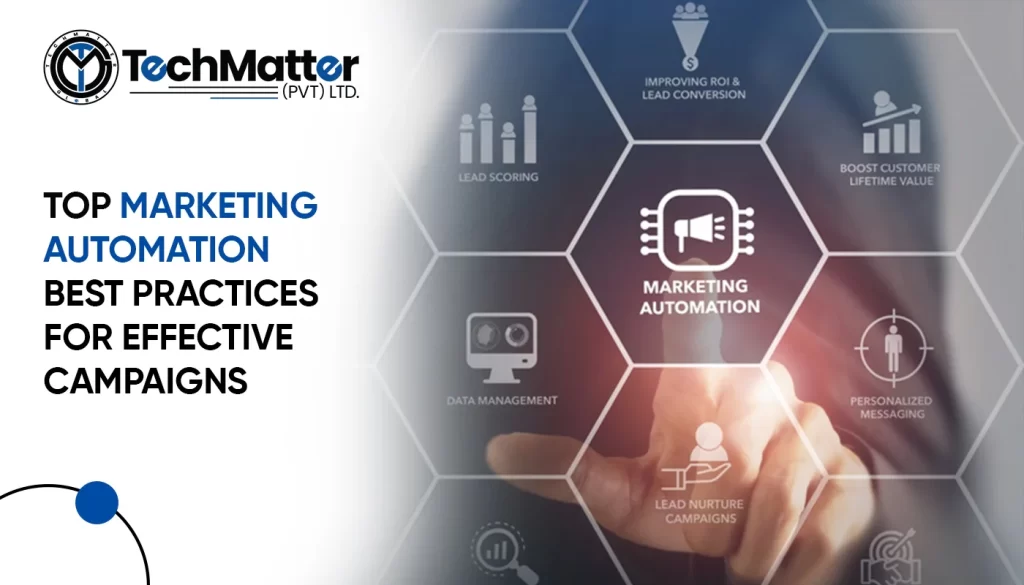
You can find countless marketing blogs praising the wonders of automation campaigns. They cover everything from greeting new subscribers and guiding them through the onboarding process to reconnecting with inactive customers and honoring the most dedicated users.
But what many fail to address are the essential best practices for marketing automation that can truly elevate your campaigns. In this blog post, we’re going to explore the top-notch marketing automation best practices that you should wholeheartedly embrace if you’re determined to work smarter, not harder. Let’s dive in!
Before setting up your automation strategy, decide on your goals. Having clear and measurable objectives is key. As time goes by, you might need to make adjustments to your strategy. When this happens, your goals will keep you focused during the process and help you understand the results.
So, the first step to starting a quality marketing automation is to decide your end goal. Is it…
Likewise, when planning your email marketing automation, reflect on how it can help your overall marketing and business goals. Remember: Never hit “send” without a purpose behind that email.
Opening the maximum capacity of your leads is essential for transforming them into faithful clients. A painstakingly created lead the executives procedure engages your deals and showcasing groups to successfully sustain leads, at last limiting botched open doors and boosting transformations.
By harnessing the power of automation, you can supercharge these efforts. With a robust lead management and scoring approach, you can leverage automation to deliver personalized content, monitor customer behavior, and seamlessly hand off qualified leads to the sales team when they show strong buying intent.
On the same note of behavior segmentation, let’s discuss dynamic groups.
Regular static groups are formed manually, i.e., you add the contacts manually. When you segment your mailing list with dynamic groups, it means contacts will be added or removed from a group based on certain criteria. This means the group is always changing.
This is a great tool to complement behavioral segmentation as it creates that custom experience clients are looking for and saves you a lot of time. Instead of generic emails to all contacts, create dynamic workflows that people join or leave based on their actions.
Each contact can receive the right message at the right time while you are dealing with other tasks. This way, your business can nurture leads more efficiently and increase conversion rates.
To make your segmentation strategy work, map your lead and customer flow to ensure a smooth journey for leads and customers. Again, this involves understanding your audience.
To map a good journey and use it in your email marketing strategy, learn about the stages a contact goes through, from initial contact, all the way to conversion and beyond. You can then find potential bottlenecks, and touchpoints to optimize and tailor your automation strategies.
Start simple: think about the basic stages such as awareness, consideration, decision, and retention. Then, study how each contact moves through each stage and what actions they take along the way. This will help you create automated workflows that will guide leads through the funnel in a seamless way.
Remember that behavior-based triggers are designed to respond to user actions, allowing for personalized interactions in real-time. This proactive approach ensures that automated messages are both timely and aligned with the user’s current interests or needs.
In essence, behavior-based triggers significantly improve the relevance of automated communications. Whether it’s following up with a personalized email after an online interaction or providing recommendations based on past purchases, this strategy boosts customer engagement and drives conversions at the optimal moment when a user is most likely to be responsive.
Transforming clients into advocates can fundamentally work on a brand’s probability of progress. Advocates are bound to allude to others and become recurrent clients, in this manner adding to long-haul business development.
Advertisers can utilize mechanization to support client connections past the buy. For instance, they can carry out mechanized crusades that look for audits, empower social sharing, or send restrictive dedication offers, which can transform fulfilled clients into excited brand advocates. Thus, those promoters add to a positive brand picture and can draw in new business.
At the point when organizations carry out marketing automation practices, they ought to coordinate their advertising robotization stage with their CRM framework to empower cooperation between the promoting and outreach groups. This arrangement smoothes out correspondence and guarantees a consistent handoff of leads between divisions.
For outreach groups explicitly, perceivability into past and current connections from showcasing efforts empowers reps to have more advanced discussions with possibilities and either address or stretch out beyond client needs and problem areas.
Furthermore, this incorporation can outfit the group with the important abilities to take advantage of the computerization instruments. Preparing the two groups on the showcasing mechanization stage guarantees everybody comprehends how to really utilize it.
By syncing data between these two systems, you can have a unified view of your leads and customers. Also, you can track leads’ interactions across channels, from initial engagement to conversion and beyond. By doing so, you can put into practice the segmentation and personalization strategies you’ve learned in this post so far.
With integration between your marketing automation and CRM, your sales teams can access valuable insights and context about leads.
Integrating tools means a more coordinated strategy between marketing and sales and increases your business’ overall performance.
Keep in mind that almost every interaction in your marketing automation journey is traceable. To evaluate the success and impact of your marketing automation campaigns, take into account the following metrics:
You can likewise follow additional metrics, for example, webpage and presentation page visits, number of content downloads, campaign results, etc.


IT Solutions and Managed Services Provider specializing in developing custom solutions.
 +1 (781) 667-5321
 info@techmatter.co
 100 N Brand Blvd Suite 522, Glendale, CA 91203, USA