IT infrastructure and services refer to the combination of hardware, software, network resources, and data storage systems that support an organization’s technology needs. These components help businesses deliver digital experiences, maintain productivity, and keep operations running seamlessly.
The goal of IT infrastructure management services is to monitor and optimize these systems to prevent downtime, improve performance, and enhance security.
Services for handling and maintaining an organization’s technical basis are included in infrastructure services. Some benefits include network management, server administration, data storage, cloud computing, cybersecurity, and IT consulting. They ensure an organization’s IT infrastructure runs smoothly and optimally, facilitating effective business operations.
It plays a crucial role in the functioning and success of modern organizations. Here are some key roles and responsibilities of an infrastructure company:
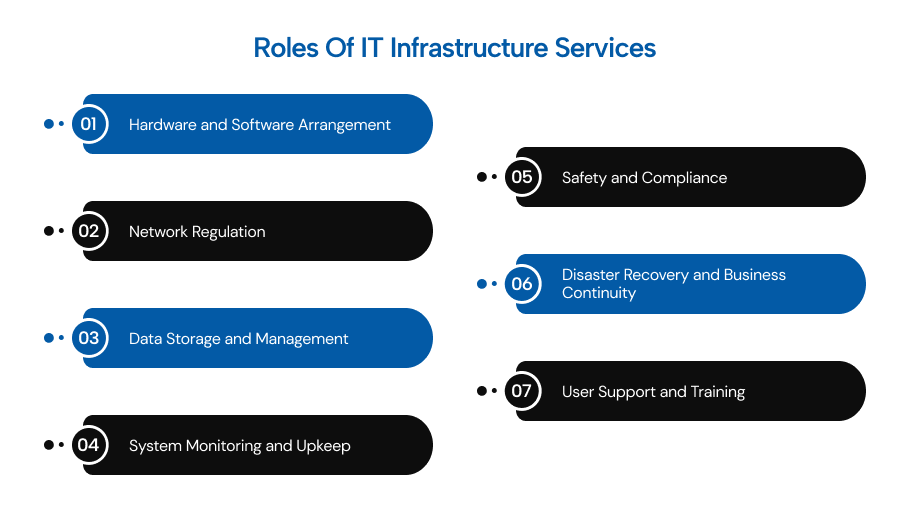
It acquires, implements, and maintains servers, computers, storage devices, and peripherals. They also manage software arrangements, including operating systems, applications, and utilities required for efficient IT operations.
Designing, deploying, and regulating the company’s network infrastructure falls within the scope of the infrastructure department. Networks, routers, switches, and firewalls are included. They ensure company-wide information flow, security, and privacy.
Data management and storage are taken care of by the infrastructure department. They manage and optimize storage systems such as on-premises servers or cloud-based solutions to guarantee data availability, integrity, and backup. They also implement data management rules and processes to control data retention, privacy, and security.
It also protects data and IT assets. Antivirus, intrusion detection, and firewalls prevent data breaches, cyberattacks, and unlawful access. They follow data security and privacy laws.
In the case of a disaster or interruptions, IT infrastructure services design and implement recovery plans for IT systems and data. They set up backup protocols, offshore data storage, and redundant systems to reduce downtime and maintain company continuity. Additionally, they carry out regular tests to confirm the success of these programs.
It offers end users inside the company technical help. They support troubleshooting connectivity, software and hardware issues, and user inquiries. Additionally, they could run training sessions to improve user expertise and understanding of efficiently utilizing IT resources.
Without reliable infrastructure, even the best software or tools can’t perform at their full potential. Proper IT management ensures efficiency, security, and scalability giving organizations the competitive edge they need in a technology-driven world.
Investing in professional IT infrastructure services allows businesses to focus on innovation and growth while experts handle the complex technical details behind the scenes.
IT infrastructure services are required to handle data, apps, and networks, exposing businesses to internet hazards and prohibiting them from using new technology. It is essential for digitally competitive businesses. Tech companies undoubtedly require this to succeed.
What do IT infrastructure consulting services offer?
IT infrastructure consulting services help businesses assess their existing systems, identify performance gaps, and design tailored technology strategies. Consultants guide companies through upgrades, migrations, and cloud transitions to improve overall IT efficiency.
How can IT infrastructure and services benefit my business?
Strong IT infrastructure and services improve business productivity, reduce operational costs, and enhance security. They create a stable foundation that supports growth, innovation, and digital transformation in any organization.
Are IT infrastructure managed services suitable for small businesses?
Yes, IT infrastructure managed services are ideal for small businesses that want enterprise-level IT support without the cost of a full in-house team. These services provide proactive monitoring, quick issue resolution, and scalable solutions at affordable rates.


IT Solutions and Managed Services Provider specializing in developing custom solutions.
 +1 (781) 667-5321
 info@techmatter.co
 100 N Brand Blvd Suite 522, Glendale, CA 91203, USA