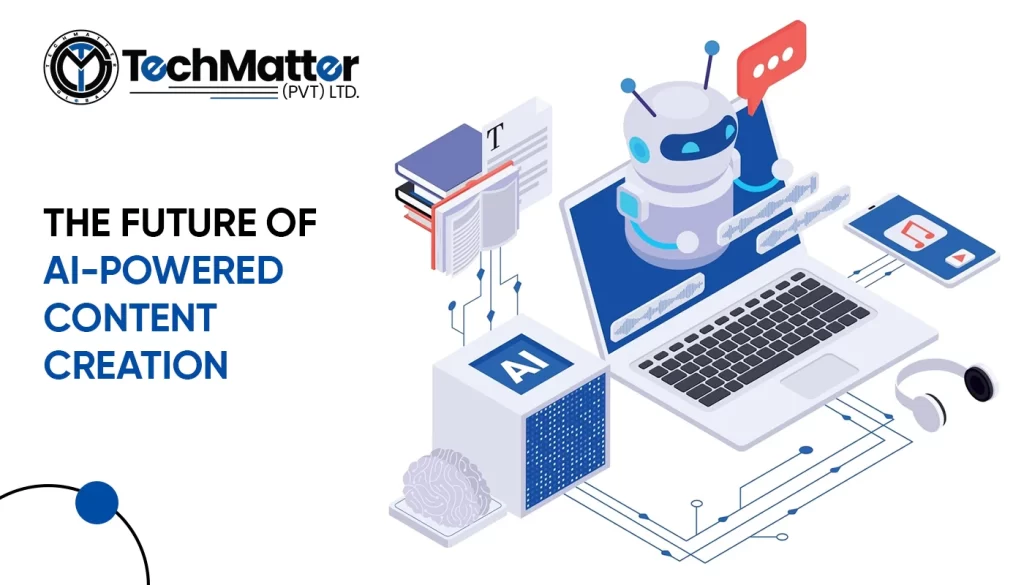
It is currently employed in various content-generation capacities. NLP, which lets machines understand and decipher the human language, is one of its most popular uses. This enables the creation of automated content like news articles or social media posts, which can be based on data inputs or pre-designed templates.
AI is also being used for content generation through image and video recognition. This technology can recognize objects, faces, and other visual elements and can be used to develop or curate visually appealing content relevant to specific target audiences.
AI is widely used in content creation to improve personalization and optimization. For example, It can analyze user behavior and preferences to recommend personalized content. It can also optimize content for search engine optimization (SEO) to increase visibility and engagement. Automating specific tasks, improving efficiency and accuracy, and enhancing the quality of content.
There are several ways in which the use of AI-powered technologies might increase content creators’ efficiency and output. Here are a few of the benefits of using AI in content development.
It includes biases, ownership disputes, and authenticity challenges. AI-generated content may reflect the preferences of the data used to train it, resulting in unjust or discriminatory content. However, the ownership of the content produced by it needs to be clarified, presenting legal and ethical concerns. Lastly, guaranteeing the validity of AI-generated content is challenging because it might be difficult to differentiate between what is real and what is.
One of the challenges and limitations of AI is its inability to produce original and innovative work. While it can generate material based on known patterns and data, it may need human guidance to create original and ground-breaking concepts.
The reliance on AI in the content on data and algorithms is one of its fundamental challenges and limitations. It needs vast amounts of data to learn, and if the data is biased or partial, it can lead to the development of wrong or incomplete information. In addition, algorithms can only function within the constraints of their programming, limiting the inventiveness and adaptability of AI-generated material. Thus, AI-generated work may need more complexity and depth from human authors.
It has obstacles and limits, such as language hurdles. The system may struggle to comprehend and develop material in languages for which it has yet to be taught. Contextual comprehension is also problematic, as it may work to understand the complexity of human language, resulting in erroneous or irrelevant content.
In the coming decades, It is anticipated to continue influencing the content environment in different ways. Advanced AI algorithms will likely make content generation and curation more efficient, customized, and audience-specific. AI-powered content analysis and recommendation systems will allow publishers to provide their audiences with more relevant and entertaining material. Chatbots and voice assistants will also change content consumption. It will also spur the emergence of immersive, interactive narrative formats like augmented and virtual reality.
Natural language generation (NLG), automated video editing, image and audio synthesis, personalized content production, and AI-assisted content curation are emerging trends and developments in AI-driven content. These advances are speeding up, improving, and personalizing content development for many enterprises.
The rising use of artificial intelligence and automation technology in content development and marketing has several consequences for content creators and marketers. Among these are the need to remain current with the most recent AI tools, the possibility for enhanced efficiency and scalability, and the significance of preserving a human touch in content and communications.
A Short Summary
Artificial Intelligence can potentially transform numerous industries, including the writing industry. With AI-powered tools and technology, producers can automate tedious processes, generate tailored content, and boost their creativity. Nonetheless, many content creators have yet to see AI as a helpful tool for their job. To grasp the full potential of artificial intelligence, creators must be willing to investigate its possibilities and integrate them into their creative processes. By doing so, they can create more exciting and individualized content that resonates with their audience, resulting in increased success and influence in their respective sectors.


IT Solutions and Managed Services Provider specializing in developing custom solutions.
 +1 (781) 667-5321
 info@techmatter.co
 100 N Brand Blvd Suite 522, Glendale, CA 91203, USA