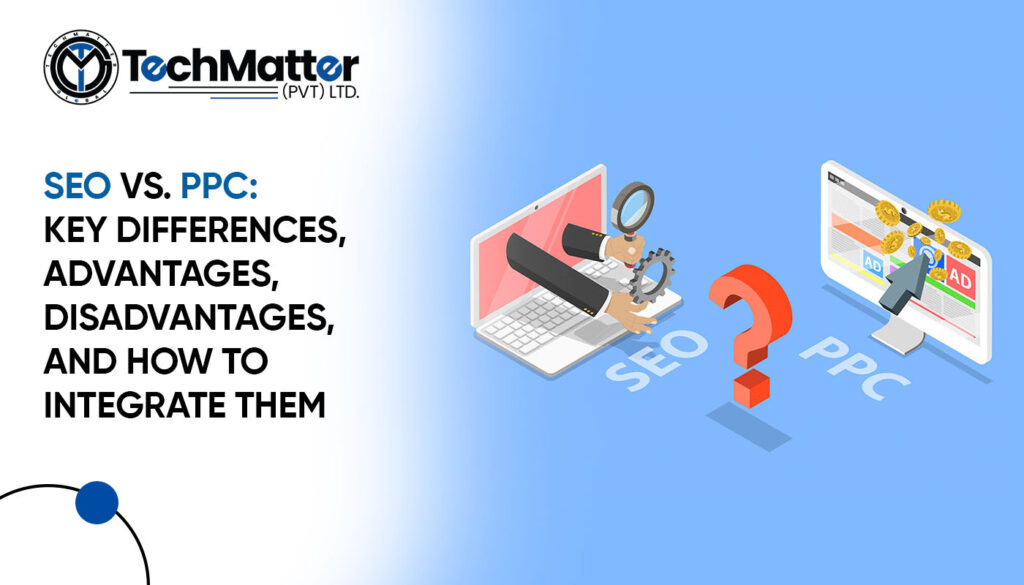
Site design improvement (Web optimization) is a computerized showcasing procedure that spotlights working on the permeability of a site or a page in a web crawler’s neglected outcomes. This includes improving the site content, design, and client experience to rank higher in web crawler results pages (SERPs).
Pay-per-click (PPC) is a web-promoting model that directs people to sites. Publicists pay a distributor (commonly a web search tool, site proprietor, or organization of sites) when the promotion is clicked. PPC is an approach to purchasing visits to your site instead of procuring those visits naturally.
Organizations should use compelling showcasing systems to reach their target audience in the computerized age. Website design enhancement and PPC are two of the most useful assets in the advanced advertiser’s toolbox, each with special benefits and difficulties. Understanding and utilizing both can give you a huge advantage.
This article will investigate the vital contrasts between Website design enhancement and PPC, their benefits and weaknesses, and how they can be incorporated for the most extreme adequacy. We’ll likewise see best practices, contextual investigations, and master bits of knowledge to give a thorough manual for utilizing these computerized promoting methodologies.
Web optimization includes methods and techniques to improve a site’s positioning on web crawlers like Google. The objective is to increase natural (non-paid) traffic to the site, upgrade its permeability, and draw in additional expected clients.
Web optimization streamlines a site’s content, construction, and specialized perspectives to make it more appealing to web indexes. This incorporates catchphrase research, content creation, external link establishment, and guaranteeing the site is versatile and quick-loading.
On-page Website optimization alludes to enhancing individual site pages to rank higher and procure more applicable traffic. This incorporates streamlining content, HTML code, and site engineering. Key components include:
Off-page Search engine optimization centers around moves initiated beyond your site to affect your rankings inside SERPs. This fundamentally includes external link establishment, virtual entertainment showcasing, and force to be reckoned with an effort to assemble the site’s power.
Specialized Web optimization alludes to enhancing the specialized parts of a site to work on its creeping and ordering via web indexes. Key elements include:
PPC is a model of web showcasing in which publicists pay a charge each time one of their promotions is clicked. It’s an approach to purchasing visits to your site rather than endeavoring to procure those visits naturally.
Sponsors bid on catchphrases on which to focus their promotions. When a client looks for those catchphrases, the web index shows the most noteworthy offering promotions at the highest point of the query items. Sponsors are charged just when their promotion is clicked.
Search promotions appear at the highest point of web index results pages (SERPs) when clients look for explicit watchwords. These promotions are profoundly designated and successful in catching high-expectation traffic.
Show promotions show up on different sites across the web that are important for the presentation organization. These visual advertisements can incorporate pictures, recordings, or intelligent components.
Virtual entertainment advertisements are shown on online platforms like Facebook, Instagram, LinkedIn, and Twitter. They can be exceptionally targeted based on client socioeconomics, interests, and behavior.

Website optimization requires a critical, forthright interest in time and assets; however, it can benefit long-haul without progressing costs. PPC, then again, requires persistent monetary speculation, with costs expanding in cutthroat business sectors.
Web optimization centers around drawing in natural rush hour gridlock through high web crawler rankings, while PPC drives traffic through paid ads. Search engine optimization ordinarily brings about more maintainable, long-haul traffic, though PPC provides quick but brief traffic support.
Website optimization endeavors can require a while to begin showing huge outcomes because web search tools are required to creep and list the streamlined substance. PPC can create traffic and changes quickly once the promotions are live.
Web optimization offers long-haul benefits as top-notch content and backlinks drive traffic even without progressing endeavors. PPC isn’t practical without persistent speculation; when the promotion spend stops, so does the traffic.
PPC offers more noteworthy control and adaptability, permitting publicists to change spending plans, target explicit socioeconomics, and make different promotion minor departures from the fly. Website design enhancement changes frequently rely upon web search tool calculations, which can be less surprising and harder to control.
Joining Website design enhancement and PPC can augment perceivability on web indexes. While web optimization guarantees natural postings, PPC advertisements can be at the top of query items, improving the probability of catching snaps from likely clients.
Utilizing both web optimization and PPC provides more extensive information. PPC missions can offer prompt criticism on keyword execution, which can be utilized to refine Website design enhancement techniques. On the other hand, website optimization information can feature catchphrases that merit putting resources into PPC.
Coordinating PPC and Website design enhancement is considered a more far-reaching catchphrase technique. PPC can rapidly test and distinguish high-performing catchphrases, which can then be designated in long-term Search engine optimization endeavors. This collaboration guarantees both momentary increases and long-term development.
The presence of both natural and paid postings on a similar web search tool results page (SERP) can increase the general active visitor clicking percentage. Clients are bound to tap into a brand that seems, on various occasions, to be in total agreement, upgrading believability and trust.
A joined methodology considers a more all-encompassing computerized showcasing system. Website optimization constructs major areas of strength for a natural presence, while PPC gives quick permeability and traffic. This double system guarantees that all phases of the client venture are designated.
Incorporating Website design enhancement and PPC can be costly. While Web optimization requires forthright venture and progressing exertion, PPC requires constant monetary expense. Adjusting the financial plan between these two techniques can be challenging for organizations with restricted assets.
Overseeing both Web optimization and PPC crusades calls for critical investment and ability. Organizations might have to designate devoted groups or recruit outer specialists to guarantee the two techniques are enhanced, which can be asset escalated.
Running synchronous Website optimization and PPC missions can add intricacy to the generally advanced promoting system. Organizing endeavors, following execution, and making information-driven changes require vigorous frameworks and cycles to avoid shortcomings and covers.
Begin by fostering a bound-together catchphrase system for Search engine optimization and PPC. Use PPC missions to test and recognize high-performing watchwords, then consolidate these into your Search engine optimization endeavors. This guarantees your site is enhanced for the most significant and successful terms.
Carry out cross-channel remarketing to target clients who have recently interacted with your site. Use PPC advertisements to reconnect guests who tracked down your site through natural pursuit yet didn’t change over. This can increase transformation rates and augment the return on investment for the two systems.
Influence the information from PPC missions to illuminate your Web optimization methodology. Dissect which catchphrases and promotion duplicates perform best in PPC and utilize this knowledge to enhance your site content and meta labels for natural pursuit.
Guarantee that your content methodologies for Website optimization and PPC are adjusted. Create top-caliber, catchphrase-rich content that can be utilized for both natural pursuit rankings and PPC points of arrival. Steady information across the two channels can further develop client experience and brand trust.
Coordinate following and investigation instruments to screen the exhibition of Website design enhancement and PPC crusades. Use instruments like Google Investigation and Google Promotions to assemble complete information and gain bits of knowledge into client conduct, crusade adequacy, and, in general, return for capital invested.
Characterize clear objectives for both Search engine optimization and PPC crusades. Whether it’s rising site traffic, producing leads, or supporting deals, having explicit targets will help you direct your technique and measure achievement.
Keep up with steady information across Search engine optimization and PPC endeavors. Guarantee that your PPC advertisements’ language, tone, and offers align with your site’s substance. This consistency fabricates trust and builds up your image character.
Lead normal execution surveys to evaluate the viability of your incorporated procedure. Investigate key measurements, distinguish regions for development, and change your strategies case-by-case to stay ahead of the opposition.
Remain informed about web search tool calculation refreshes and change your Web optimization and PPC systems accordingly. Adapting to changes can help you maintain your rankings and promotion execution.
Use computerization apparatuses to smooth out and improve your Website design enhancement and PPC endeavors. Apparatuses like Google Advertisements’ robotized offering and Website design enhancement programming for catchphrase following can save time and further develop productivity.
An internet business coordinated Website optimization and PPC to support its web-based deals. By utilizing PPC to target high-goal catchphrases and Website design enhancement to construct long-haul natural traffic, the organization saw a huge expansion in rush hour gridlock and transformations. A definitive examination from PPC crusades refined the website design enhancement methodology, prompting a 30% expansion in natural deals in six months or less.
A neighborhood specialist co-op utilized PPC to produce leads while rapidly building its website design enhancement presence. The PPC crusades designated nearby watchwords and drove prompt traffic while progressing in web optimization endeavors that further developed the site’s neighborhood search rankings. This double methodology brought about a half expansion in neighborhood requests and a 40% decrease in client securing costs.
A B2B organization coordinated Web optimization and PPC to upgrade its lead-age endeavors. PPC was utilized to target leaders with high-esteem watchwords, and Website optimization zeroed in on making educational substance to draw in natural rush hour gridlock. The consolidated procedure prompted a 25% expansion in qualified leads and a higher commitment rate on the site.
Website design enhancement and PPC are strong computerized advertising methodologies with novel benefits and difficulties. While Website design enhancement provides long-term, supportable traffic, PPC offers prompt permeability and exact focusing. Incorporating both can boost your web-based presence and drive better outcomes.
Understanding the critical contrasts between search engine optimization and PPC and their advantages and downsides is fundamental to creating a powerful, advanced advertising system. Organizations can achieve more noteworthy permeability, further developed traffic, and higher conversion rates by utilizing these two qualities.
To remain serious in the consistently developing computerized scene, keep teaching yourself the most recent patterns and best practices in Web optimization and PPC. Investigate online courses, attend online classes, and follow industry specialists to stay up with the latest and most successful.


IT Solutions and Managed Services Provider specializing in developing custom solutions.
 +1 (781) 667-5321
 info@techmatter.co
 100 N Brand Blvd Suite 522, Glendale, CA 91203, USA