Implementing an Electronic Health Record (EHR) system is one of the most critical decisions a healthcare provider can make, not just to digitize records but to improve overall patient care, streamline operations, and boost revenue. However, without a solid EHR implementation plan, the entire process can become overwhelming, costly, and ineffective. Whether you’re a small clinic or a multi-location hospital, this guide will walk you through the most essential steps to ensure your implementation is successful and more importantly, profitable.
Consider establishing an EHR to be similar to building a new clinic branch, except this time online. It’s more than just installing software. It affects all aspects of your organization, including clinical operations, billing systems, personnel responsibilities, and even patient experience. The success of this shift is dependent on careful preparation and alignment with clinical and budgetary objectives.
And if you’re aiming to improve Revenue Cycle Management Solutions and ensure clean data flows from the first patient visit to the final billing, your EHR must be tailored and deployed with precision.
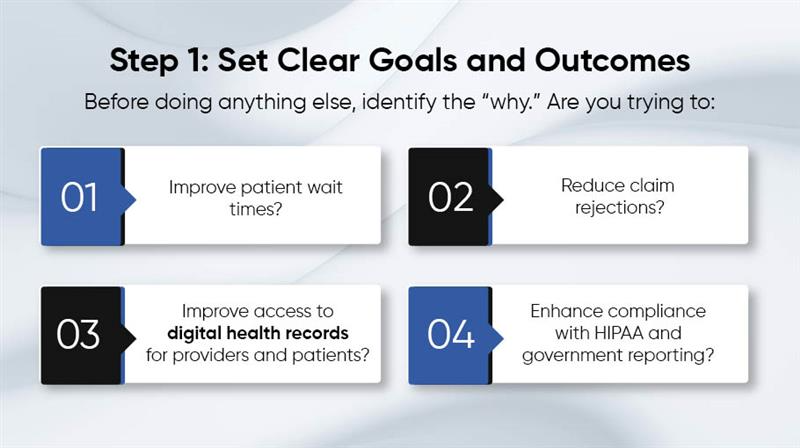
Before doing anything else, identify the “why.” Are you trying to:
The clearer your goals, the easier it is to align the system and the people who will use it. These goals should also tie directly to business growth and revenue improvement. Don’t just think operationally, think strategically.
EHR is not just a project to complete. It’s a transformation that helps healthcare practices shape their infrastructure. For which your team should have the following:
Make sure each department has a voice. Why? Because the front desk’s needs are just as important as the billing department’s when configuring workflows that affect cash flow and patient satisfaction.
Before introducing new technology, understand how your team currently works. What steps are they taking for:
Once you have a clear picture, you can map these into your EHR setup and remove inefficiencies. This is where many providers overlook a major opportunity. Optimized workflows within your EHR can directly support Revenue Cycle Management Solutions by reducing claim denials and speeding up collections.
EHR is not for the purpose of flexing and entertainment. It is basically developed for the purpose of providing all the necessary requirements for healthcare practices. So find the one that suits your practice best rather than one that has the flashiest features.
The best EHR for your organization is the one that fits your needs, not the one with the flashiest features.
Here’s what to look for:
Take the time to request demos, ask tough questions, and involve real end-users in the decision-making process.
EHR implementation isn’t just a capital investment. It includes:
Be realistic and build in a buffer. It’s better to over-prepare than to be caught off-guard halfway through.
Moving all the data from the old system to the new EHR system is one of the critical components of implementation. Because this is not just about dumping data, but it also includes:
Keep one thing in mind that even a single mistake in data migration can lead you to clinical risks, claim rejections, and lost revenue.
This step can make or break your implementation.
Your staff doesn’t need to become tech experts, but they must become confident users of the system. This directly impacts productivity and ensures the EHR becomes a tool, not a burden.
Set a go-live date when the clinic is less busy, if possible. Prepare for:
Expect hiccups. That’s normal. The key is having a rapid response plan to handle them.
Many providers stop at go-live. That’s a mistake. The first 90 days post-implementation are crucial for optimizing performance.
If your EHR isn’t improving your Revenue Cycle Management Solutions within a few months, something needs to be adjusted.
This is where you get the return on investment. The basic purpose of EHR is not just to stand in a digital world. But to become the backbone of a more stable, digitally efficient and profit-generating practice.
Tie every EHR feature back to your bottom line. When used right, it becomes your silent business partner.
Today’s patients expect convenience. Make sure your EHR supports:
This doesn’t just improve satisfaction. It also reduces admin workload and accelerates payments.
Your EHR must comply with:
Additionally, ensure the system offers:
A single breach or non-compliant process can lead to hefty fines and patient mistrust.
The world of healthcare is just going beyond paperless. The implementation of EHR is a bold move that helps practices in improving their efficiency, financial excellence, and patient care.
You may avoid typical problems and fully leverage technology by following a disciplined checklist, aligning with your revenue goals, and remaining laser-focused on processes and adoption.
Whether you want to enhance billing performance, engage patients digitally, or acquire greater operational insights, this method can help you get started on the path to smarter care delivery and long-term success.


IT Solutions and Managed Services Provider specializing in developing custom solutions.
 +1 (781) 667-5321
 info@techmatter.co
 100 N Brand Blvd Suite 522, Glendale, CA 91203, USA