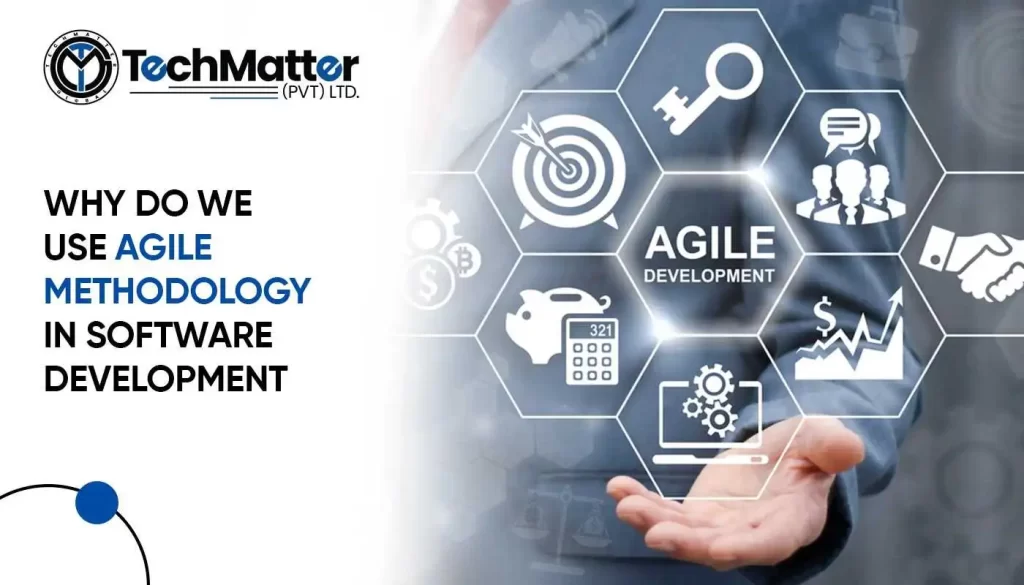
Agile is an efficient approach to project management that emphasizes incremental and iterative steps to completing projects. The project is broken down into short-term development cycles, focusing on quick delivery, flexibility, and collaboration rather than rigid plans and top-down management.
One of the key features of the Agile process is continuous feedback, which allows members to adjust to challenges as they arise. Although originally developed for software development, Agile is widely used in executing many projects and running organizations.
Agile project management methodology emphasizes adaptability, continuous delivery, iteration, and short time frames. It is better suited for ongoing projects and projects where all the details are unknown from the outset. Projects without clear constraints, timelines, or available resources are good candidates for an Agile approach.
For instance, designing and launching new products can present numerous unforeseen challenges. An Agile approach can help test products as often as necessary, iterate quickly, and communicate changes with project stakeholders.
Traditional project management approaches like Waterfall can be easier to plan out and progress easier to measure. This can make projects with clearly demarcated constraints (like a strict budget or timeline) or projects where teams are expected to work independently of stakeholders better suited for traditional approaches.
The agile approach is based on these core values and twelve principles derived from the Agile Manifesto. The manifesto was created in 2001 by seventeen software development managers. The Agile Manifesto was developed as a response to the perceived issues and challenges of software development processes of the time, aiming to address bottlenecks and streamline the development process.
Here are some guidelines that can help you achieve success in your project:
Other important things to keep in mind:
The Agile software development approach can be broken down into five steps: release, concept, inception, production, iteration/construction, and retirement.
In the first step of a project, known as concept, we identify business opportunities and estimate the time and effort required to complete it. This enables us to prioritize projects and determine which ones are technically and economically feasible.
The team members are identified in the inception stage, and funding is established. The project’s initial requirements are discussed with the customer during this stage. To keep things organized, a timeline should be created that outlines the responsibilities of each team member and defines when the work is expected to be completed for each sprint. A sprint is a predetermined period of time during which specific tasks must be completed and ready for review.
Every Agile methodology aims to welcome and adjust to change while efficiently delivering functional software. However, each method differs in how it outlines the steps of software development. The most commonly used Agile methods include the following:
These offer a structured approach for project managers to control the workflow. In Scrum, the product owner collaborates with their team to create a product backlog, a comprehensive list of all the functionalities, including bug fixes, features, and non-functional requirements, that must be implemented to deliver a successful, working software system. Once the product backlog is defined, the corresponding team can only add any additional functionality. In traditional software development, change was often seen as a costly inconvenience and, therefore avoided. However, Agile methodologies have upended this notion. The Agile approach embraces change by breaking the development process into short iterations, making it easy to modify the approach to meet the team’s evolving needs. The philosophy is that change is always an opportunity to improve the project and add more value.
The Bottomline


IT Solutions and Managed Services Provider specializing in developing custom solutions.
 +1 (781) 667-5321
(021) 37447307
+1 (781) 667-5321
(021) 37447307
 info@techmatter.co
 100 N Brand Blvd Suite 522, Glendale, CA 91203, USA