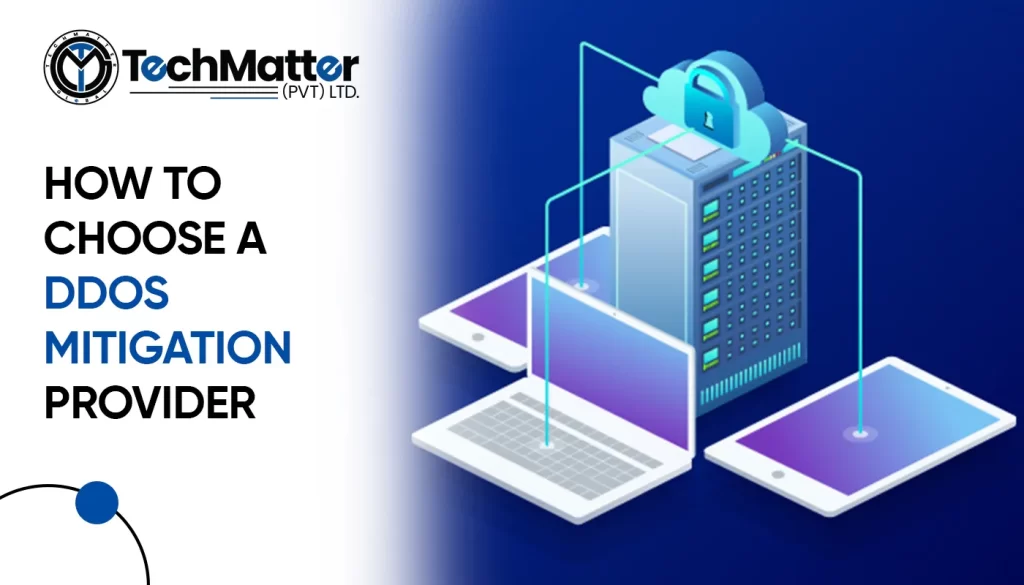
DDoS mitigation is lessening an attack’s effects on a network. They are made to preserve resource availability, which attackers aim to interfere with. When an application targeted by an attack is safeguarded and maintained operational, the effectiveness of the DDoS protection solutions is determined.
DDoS attacks can cause disruption, lost sales, and reputational damage to any firm. So, a reliable DDoS mitigation company can help you protect your online assets. This article lists vital DDoS mitigation provider selection factors.
Most important is the provider’s solution’s scalability. Your provider’s DDoS solution should handle a DDoS attack’s colossal traffic. Verify that the provider can handle high traffic volumes and scale up swiftly without affecting the functionality of your website or application.
The provider’s SLA should include guarantees for uptime, response, and resolution times. Carefully read the SLA and search for any limitations or exceptions.
The provider’s network capacity should be sufficient to withstand DDoS attacks without degrading the functionality of your website or application. Inquire about the service provider’s network architecture, bandwidth usage, and redundancy. It would be best to consider the minimum bandwidth needed for the service to work as intended. Ensure the mitigation tool’s network capacity is high enough to handle the volume of traffic your network typically receives.
Forwarding rates, expressed in Mpps (millions of packets per second), represent processing capacity (millions of packets per second). Knowing the tool’s processing capacity is essential for estimating the effectiveness of the defense against an attack. If you imagine DDoS mitigation as a wall, computing power determines how strong an attack can be before the wall gives way. Attacks that reach 50 Mpps are common in the modern world, but advanced attacks can earn up to 200–300 Mpps.
A trustworthy DDoS mitigation provider should use multiple layers of security. This may combine several technologies, including traffic filtering, rate limitation, and behavioral analysis.
It’s crucial to understand how well your DDoS mitigation system works. The supplier should provide real-time monitoring and data so you can spot and address any issues immediately.
Choose a provider with expertise in DDoS attack mitigation. To learn more about the provider’s track record, look for case studies, client references, and reviews.
“time to Mitigation” is self-explanatory, but you should always inquire about a provider’s statistics. How soon after an attack has been discovered does mitigation take place? DDoS assaults can bring down a targeted server or network in minutes, necessitating a lengthy recovery period. This downtime can have a significant negative impact on enterprises, even affecting operations for weeks or months.
DDoS attacks at the network layer prioritize volume and rely on high traffic volumes to seriously damage your IT infrastructure. This attack can be mitigated using null routing, sink holing, scrubbing, and IP masking techniques. Both approaches aim to distinguish between safe and unsafe traffic.
DDoS attacks at the application layer are typically considerably subtler than attacks at the network layer. This kind of attack tries to look like regular traffic to avoid detection by security technologies. Your solution must be able to profile HTTP/S traffic and distinguish between bots and authentic users to prevent Application Layer attacks.
Be sure the service provider offers support around the clock and has a skilled and helpful customer service staff. Inquire about the many support channels, response times, and escalation procedures that the provider offers.
Several alternatives for DDoS mitigation pricing models are available. One price scheme may be preferable to another. You only pay when attacked in a “pay as you go” pricing model. Since there is no payment upfront, this may appeal to businesses, but it may be expensive if you have an attack. Comprehend the conditions before choosing this pricing model because it’s a risk.
When a DDoS mitigation system has a base price and additional fees for deployment, support, or other add-ons, this is called service-based pricing. If your team has an experienced IT staff that can handle the deployment and analysis, this solution might be a good fit for them, but if you need support from the provider, it might be more expensive.
The simplest and most popular price structure for DDoS mitigation is a flat monthly fee. The solution provider should be highly hands-on from implementation to the attack’s analytical phase with this type of pricing.
DDoS mitigation services can range significantly in price. A DDoS attack’s potential impact and the provider’s solution’s cost should be weighed against the worth of your online assets.
If your company works in a regulated sector, ensure the provider’s solution complies with applicable compliance regulations, such as PCI DSS, HIPAA, or GDPR.
Conclusion:
As you can see, selecting the most suitable provider for DDoS mitigation requires considering a great deal of relevant information. When choosing a DDoS mitigation provider, consider scalability, SLAs, network capacity, multi-layered protection, monitoring and reporting, experience, support, cost, and compliance.
The purpose of this article was to help you gain some insight into questions to ask potential providers before you select one. You may choose a dependable solution that can defend your online assets against DDoS attacks by evaluating providers based on these parameters and then comparing those providers to one another.


IT Solutions and Managed Services Provider specializing in developing custom solutions.
 +1 (781) 667-5321
 info@techmatter.co
 100 N Brand Blvd Suite 522, Glendale, CA 91203, USA