In the present tech-driven world, software is significant in pretty much every part of business activities. How do organizations guarantee their product is agreeable, secure, and proficient? This is where software audits become possibly the most important factor. Understanding what a software audit involves and its importance is essential for any business that depends on software.
A software audit is an extensive survey of a software program to guarantee it fulfills specific rules and guidelines. It includes looking at the product’s code, usefulness, authorizing understanding consistency, and safety efforts.
Software audits assume a significant part in guaranteeing the legitimate and legal utilization of programming inside an association. By recognizing disparities, guaranteeing consistency, and upgrading, generally speaking, programming quality, reviews are fundamental for the smooth activity of any association.
One essential justification for leading software audits is to guarantee consistency with permitting arrangements and administrative necessities. Non-compliance can prompt weighty fines and legitimate issues.
Standard surveys help with recognizing bugs, execution issues, and regions for advancement, thus redesigning the overall idea of the item.
Software audits play a crucial role in protecting intellectual property by ensuring that the software is not pirated or misused, which in turn safeguards the company’s valuable assets.
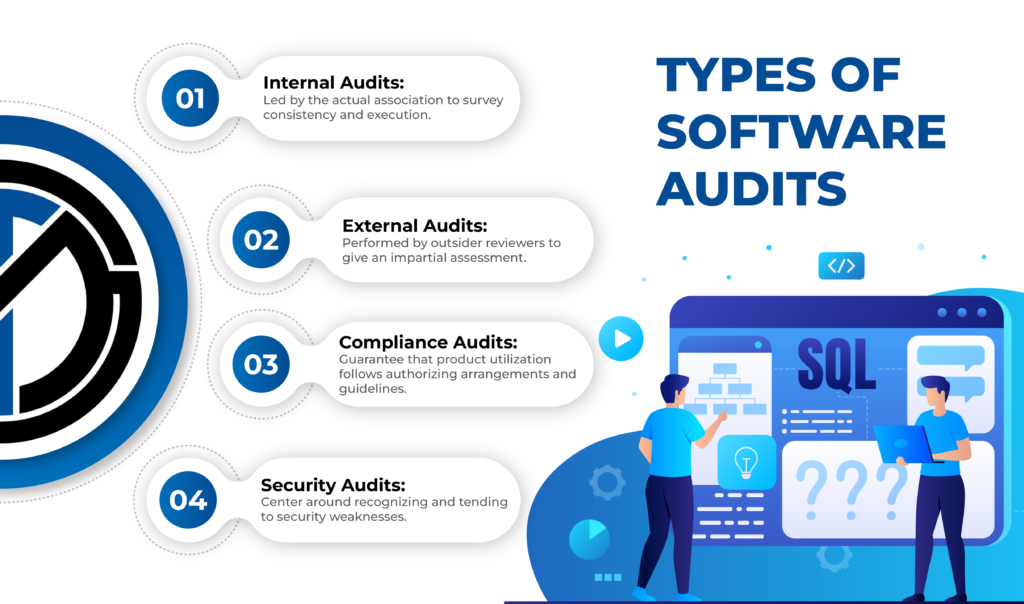
The organization’s internal team conducts internal audits. They are essential for continuous improvement and internal compliance. Internal audits’ primary purpose is to self-assess and ensure the software meets internal standards and policies. The process includes planning, reviewing documentation, and reporting findings.
External audits, did by free inspectors, are fundamental for guaranteeing the product’s consistence and execution. These reviews are indispensable for laying out validity and entrust with partners, financial backers, and administrative bodies.
Guarantee that your product meets all authorizing arrangements and lawful necessities by going through compliance audits. These reviews are pivotal for keeping up with adherence to programming permitting arrangements and assisting your association with staying away from legitimate intricacies and fines.
Security audits assume a vital part in uncovering and tending to potential security weaknesses in software. By directing security reviews, we can shield touchy information and maintain the trustworthiness of our product frameworks.
The most vital phase in a product review is to set clear goals. This includes figuring out what parts of the product should be surveyed and what objectives should be accomplished.
Assembling every single essential asset, like documentation, licenses, and admittance to software, is significant for an effective audit.
Reviewing all relevant documentation helps in understanding the software’s functionality, compliance status, and potential issues.
Interviews with partners give bits of knowledge into how the product is utilized and any worries that should be tended to.
The audit report ought to be extensive, enumerating all discoveries, issues, and suggestions.
Effectively communicating the results to the relevant parties ensures that necessary actions can be taken to address any issues.
Permitting issues are normal and can prompt legitimate issues in the event that are not tended to.
Distinguishing and fixing security weaknesses is vital for safeguarding the product and information.
Failing to comply with licensing agreements and regulations can result in penalties and reputational damage.
Regular audits help identify and mitigate risks, ensuring the software is safe and compliant.
Improving software performance by identifying and addressing issues is another key benefit of regular audits.
Audits ensure accountability by documenting and addressing software usage and compliance issues.
Automated tools can smooth out the audit cycle, making it more productive and careful.
While automated tools are helpful, manual audits provide a deeper, more nuanced understanding of the software.
Selecting the right audit tools depends on the specific needs and complexity of the software.
Conducting regular audits ensures continuous compliance and improvement.
Maintaining clear and up-to-date documentation simplifies the audit process and helps identify issues quickly.
Training employees and raising awareness about the importance of software audits contribute to a successful audit process.
The complexity of modern software systems can make audits challenging and time-consuming.
Limited resources can hinder the audit process, making it difficult to conduct thorough reviews.
Staying updated with the ever-changing regulations and compliance requirements is a significant challenge.
Understanding software audits is fundamental for any association that depends on software. By directing normal reviews, keeping up with clear documentation, and utilizing the right apparatuses, you can guarantee consistency, improve quality, and shield protected innovation. These actions are principal for an effective review process.


IT Solutions and Managed Services Provider specializing in developing custom solutions.
 +1 (781) 667-5321
 info@techmatter.co
 100 N Brand Blvd Suite 522, Glendale, CA 91203, USA